
Let teachers design their own tests, says expert
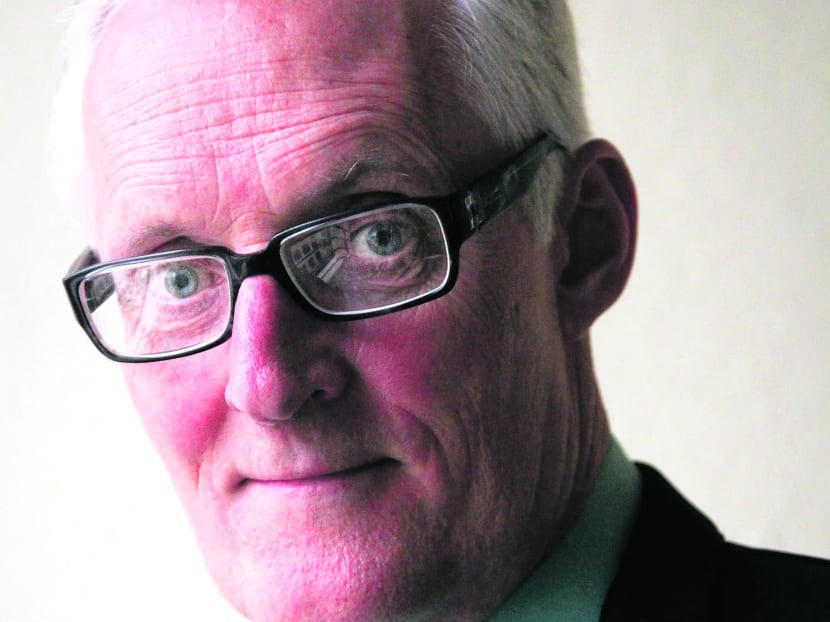
SINGAPORE — Despite having recently co-authored a book which holds up Singapore’s system as an exemplary case study, education expert Dennis Shirley, 58, believes changes are in order to the way children are taught and assessed in schools here.

SINGAPORE — Despite having recently co-authored a book which holds up Singapore’s system as an exemplary case study, education expert Dennis Shirley, 58, believes changes are in order to the way children are taught and assessed in schools here.
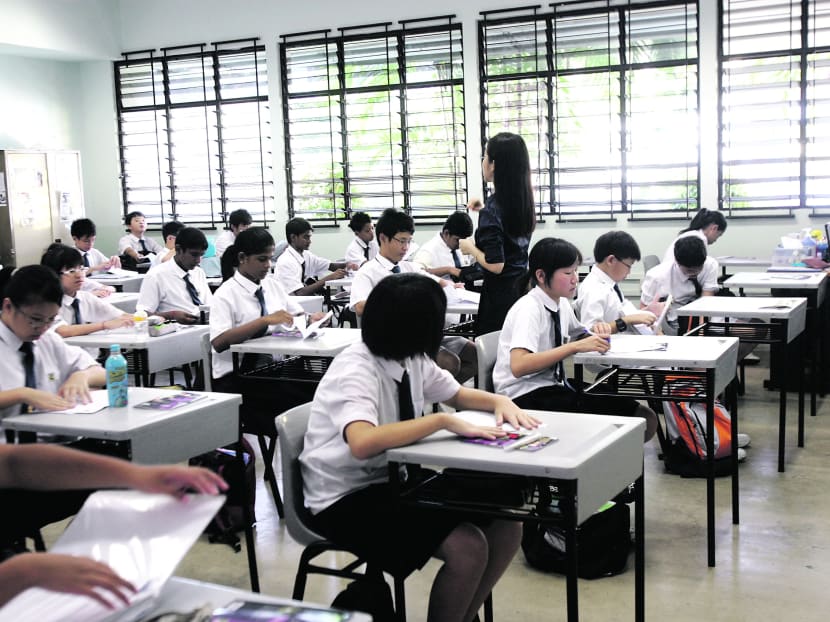
Having spent time looking at education systems in several places, including Singapore, Finland and Alberta, Canada, Dr Shirley, who hails from the Boston College Lynch School of Education, felt that the Singapore system could do with some alterations — to lower the stress levels, among other things — by, for instance, reducing the emphasis on national testing.
Instead, the task should be handed over to teachers who could design their own modes of assessment.
More play should also be incorporated into the Singapore curriculum to better allow pupils the space and time to reflect and absorb what they have learnt, he said.
However, Dr Shirley, who will be speaking at the INTASE Educational Leadership Summit conference on April 8, also noted that the success of Singapore’s education system — not least the fact that its students have regularly excelled in international tests — meant that there would be some reluctance to change it.
Dr Shirley had co-authored the book, The Global Fourth Way: The Quest for Educational Excellence. The Fourth Way concept advocates, among other things, empowering teachers to initiate changes and a prudent approach to testing.
Several features of Singapore’s education model already fit in with the concept, including strong teacher preparation programmes and policies — such as the Teach Less, Learn More movement — which seek to introduce autonomy in learning, said Dr Shirley.
However, the way that Singaporean students are being assessed reflects earlier approaches to education, which included a heavy emphasis on common standards among schools, academic rigour and a focus on outcomes.
“As the (Singapore) education system evolves towards the Fourth Way, it could soften the emphasis on (testing) … allowing teachers to design their own assessments,” he said.
While “some pressure is good”, if students are overly stressed about outcomes, “then (they) have a hard time paying attention to what is right in front of (them)”, he noted.
As part of his research, Dr Shirley had visited schools here and met with policymakers.
He noted that it is “very impressive” how Singaporean students do well regularly in international tests.
However, he added: “From what I’ve picked up from conversations in Singapore, there is perhaps excessive reverence towards test outcomes at the expense of broader ways of understanding human cognition … physical excellence, musical talents and all those other ways of demonstrating excellence.”
Apart from a high-pressure environment and intense competition, students and educators here had told him that there are inadequate opportunities to reflect on the things that are taught in class.
Nevertheless, Dr Shirley was also quick to point out the positives of Singapore’s education system.
He noted that over the years, schools here have managed to maintain high academic rigour while providing more platforms for youths to pursue their interest in areas such as sports and music.
Teachers here are also highly skilled and valued, he added, applauding how educators are seconded to the Ministry of Education to help them to grow professionally.
“The saying of ‘Those who can, do; those who can’t, teach’ — I don’t think that will ever apply here,” said Dr Shirley.
Dr Shirley, who picked up the word “kiasu” from his meetings with Singaporeans, added that it would be hard to “argue against success”.
Nevertheless, he felt that, over time, the culture here can reinvent itself and the “kiasu” mentality can be stifled. He cited the ongoing Our Singapore Conversation as an opportunity to arrive at a common understanding on the future of Singapore’s education system.
“Every society has to figure out how much attention we want to place on traditional academic skills as well as how much attention we want to devote to the happiness and subjective well-being of our children”, said Dr Shirley, adding that it is hard to recover from a “childhood that is filled with anxiety”.
Stay in the know. Anytime. Anywhere.

Subscribe to our newsletter for the top features, insights and must reads delivered straight to your inbox.
By clicking subscribe, I agree for my personal data to be used to send me TODAY newsletters, promotional offers and for research and analysis.






